
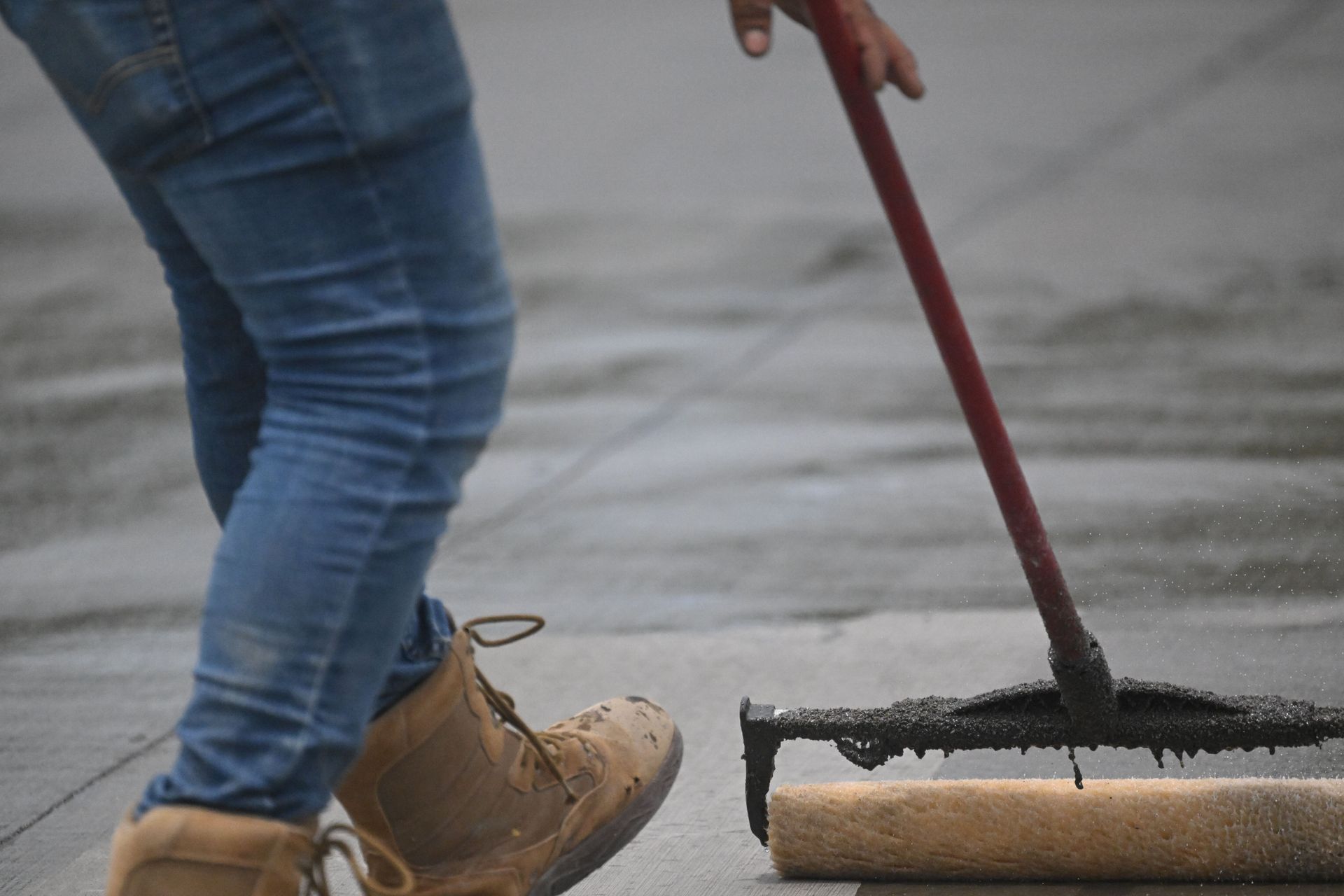
Protection That Extends Concrete Lifespan
Concrete Sealing in the Tullahoma area for driveways, patios, and walkways exposed to weather and daily use
Moisture penetration degrades concrete surfaces over time, especially in climates where winter freeze-thaw cycles force absorbed water to expand and pop off surface layers in a process called scaling. You see this as rough, pitted areas that worsen each winter and collect dirt that stains the exposed aggregate. Local Concrete Services applies penetrating and film-forming sealers across Tullahoma, Sewanee, Manchester, and surrounding areas that block moisture entry, protect decorative finishes, and make routine cleaning as simple as hosing off surface dirt instead of scrubbing stains that have soaked into porous concrete.
Sealing involves cleaning the concrete thoroughly to remove dirt, oil, and previous coatings that would prevent adhesion, then applying sealer at the coverage rate specified by the manufacturer. Penetrating sealers soak into the concrete and react chemically to fill pores, while topical sealers form a protective film on the surface that resists stains and enhances color on decorative or stamped concrete.
Schedule concrete sealing services to protect existing surfaces before seasonal weather causes further wear.
What Changes After Sealing Is Finished
Sealing reduces the concrete's permeability, which slows moisture-related damage like freeze-thaw scaling, efflorescence (white mineral deposits), and staining from oil, rust, or organic matter. On decorative concrete, sealers deepen color intensity and add sheen that ranges from matte to high-gloss depending on product choice and application method.
After sealing cures, water beads on the surface instead of soaking in, spills wipe away more easily, and the concrete looks cleaner longer because dirt and grime don't penetrate the pores. You also notice enhanced color on tinted or stamped surfaces, and reduced dusting on garage floors or basement slabs where concrete powder previously tracked into the house.
Sealer performance depends on surface preparation and proper application rates, so the concrete must be clean, dry, and free of previous failing coatings before new sealer goes down. Resealing frequency varies by exposure—high-traffic driveways or surfaces exposed to direct sun and rain need resealing every two to three years, while protected areas under roof overhangs last longer between applications.
What Property Owners Usually Ask
Questions about sealing often focus on timing, product differences, and maintenance expectations for both plain and decorative concrete surfaces.
How soon can new concrete be sealed?
Concrete must cure fully—typically 28 days—before sealing to allow internal moisture to escape. Sealing too early traps moisture inside, which can cause the sealer to delaminate or create a cloudy appearance as trapped water vapor tries to escape through the film.
What is the difference between penetrating and topical sealers?
Penetrating sealers absorb into the concrete and provide invisible protection that lasts longer but offers minimal surface sheen, while topical sealers form a protective film on the surface that enhances color and gloss but requires more frequent reapplication as the film wears from traffic and weathering.
Why does sealed concrete sometimes look cloudy or white?
Moisture trapped under the sealer, application in direct sunlight or high humidity, or applying sealer too thickly can cause blushing—a cloudy white haze that appears as the sealer cures. Proper surface dryness and application conditions prevent this issue.
When should existing concrete be resealed in Tullahoma?
Surfaces exposed to vehicle traffic, sun, and rain typically need resealing every two to three years, while protected areas or light-use walkways extend to four or five years. You know it's time when water stops beading on the surface and begins soaking in, or when color fades on decorative finishes.
What surface preparation does sealing require?
The concrete must be clean of dirt, oil, previous sealers, and efflorescence through pressure washing, chemical cleaners, or mechanical abrasion. Any cracks or damage should be repaired before sealing to prevent moisture from entering through unsealed gaps.
Local Concrete Services applies sealers matched to your concrete type and exposure conditions, using surface prep methods that ensure proper adhesion and long-term performance. Arrange a property evaluation to assess your concrete condition and discuss sealing options.