
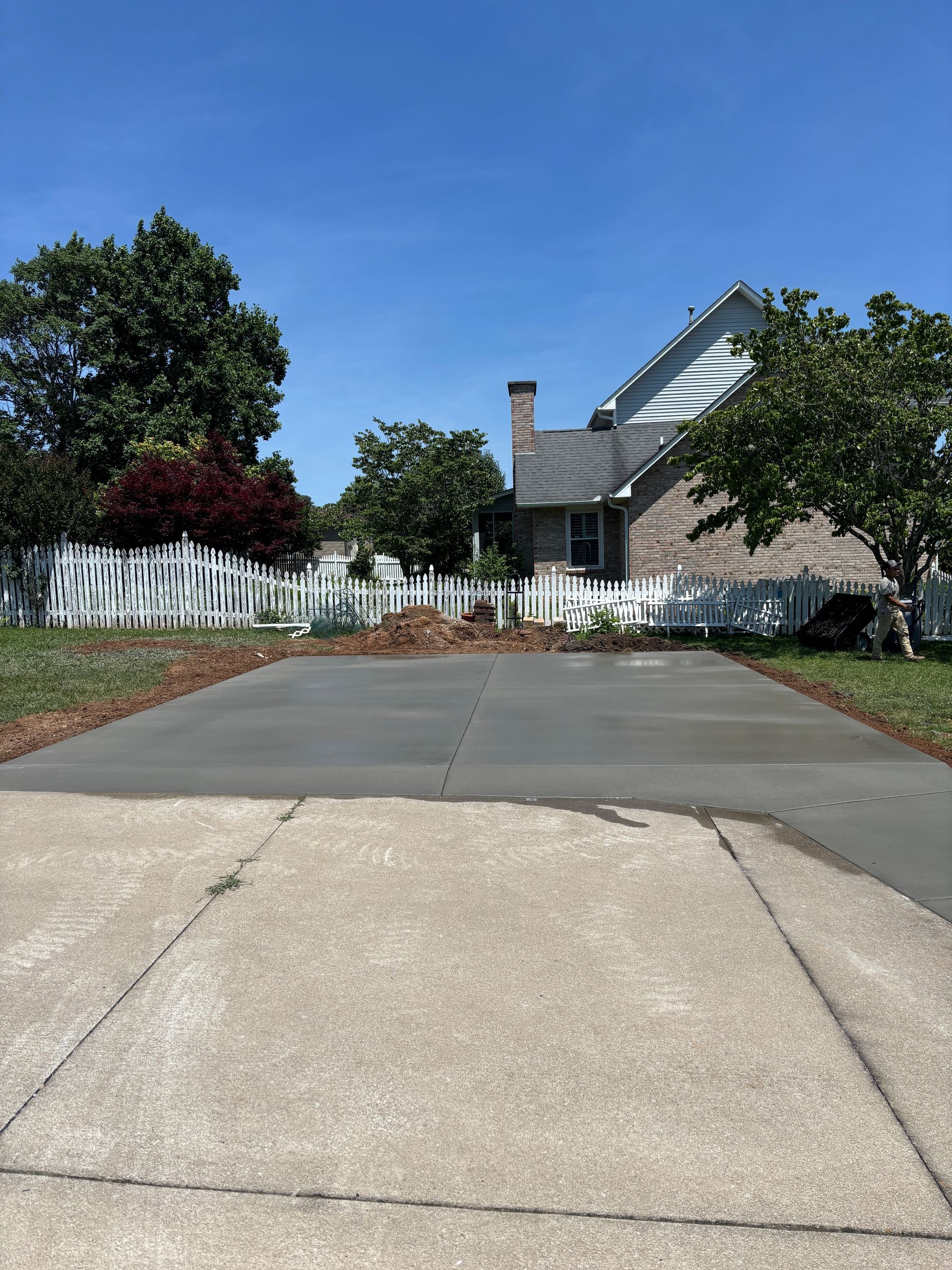
Accessible Surfaces That Handle Traffic
Driveways & Sidewalks in the Tullahoma area for new installations or replacements addressing deteriorated surfaces and accessibility needs
Driveways and sidewalks endure constant use from vehicles and foot traffic while remaining exposed to weather year-round, making them some of the most demanding concrete applications on residential properties. When existing surfaces develop extensive cracking, uneven settling that creates trip hazards, or surface deterioration from freeze-thaw damage, replacement becomes necessary to restore both function and curb appeal. Local Concrete Services installs durable driveways and sidewalks throughout Tullahoma using proper grading, reinforcement, and finishing techniques that extend service life.
New installations and replacements follow the same fundamental process: excavation to proper depth, base preparation with compacted gravel, accurate forming that establishes drainage slope, and reinforcement placement that prevents cracking under load. Driveway concrete typically requires greater thickness than sidewalks due to vehicle weight, and both benefit from control joints that direct minor cracking into planned locations.
Request a consultation to evaluate your current driveway or sidewalk condition and discuss replacement or new installation options in Tullahoma, Lynchburg, Sewanee, and surrounding areas.
Why Proper Construction Matters Long-Term
Drainage design determines whether water runs off safely or pools on the surface causing accelerated deterioration. Your driveway needs proper slope away from the garage and toward yard edges or street drainage, while sidewalks require grading that prevents water from flowing toward building foundations. Reinforcement handles stress from temperature changes and minor ground movement, and proper concrete mix design includes air entrainment that resists freeze-thaw damage.
After installation, you'll notice smooth transitions between driveway sections and garage floors without abrupt elevation changes that scrape vehicle undercarriages. Sidewalks provide safe, level walking surfaces free from the trip hazards created by settling or root intrusion under old installations. Well-executed concrete work also improves property appearance significantly—fresh driveways and sidewalks signal maintained property and create positive first impressions that affect perceived home value when you eventually sell.
Finish options let you customize appearance beyond basic gray concrete. Broom finishes add texture that improves traction in wet conditions, making them practical for sloped driveways and high-traffic sidewalks. Stamped patterns and decorative edging create visual interest for prominent front walkways, though these techniques increase installation cost and require experienced finishing work to execute properly without compromising surface durability.
Answers to Common Service Questions
Homeowners planning driveway or sidewalk work in Tullahoma or a neighboring community often have similar concerns about construction details and timing.
What makes driveway concrete different from sidewalk specifications?
Driveways typically need five to six inches of thickness with heavier reinforcement to support vehicle loads, while sidewalks generally require only four inches since they handle foot traffic without the concentrated weight and stress from automobiles.
How do you prevent driveways from cracking at garage transitions?
Proper joint placement at the garage entrance allows independent movement between the slab and driveway, preventing stress transfer that causes cracking, and matching elevation precisely eliminates the scraping issues common with poorly executed transitions.
What's the best time of year for concrete driveway work?
Spring and fall offer moderate temperatures that support proper curing, though experienced contractors work year-round by adjusting mix design and curing procedures to account for hot summer conditions or cooler weather that slows strength development.
How long before I can drive on a new concrete driveway?
Light vehicle traffic is generally safe after seven days once concrete has developed sufficient strength, but full 28-day curing produces maximum durability and resistance to surface damage from turning wheels and heavy loads.
What causes sidewalks to settle unevenly over time?
Settlement typically results from inadequate base preparation, soil erosion beneath the slab from poor drainage, or tree root growth that lifts sections, which is why proper excavation depth and compacted gravel base matter as much as the concrete itself.
Local Concrete Services designs each driveway and sidewalk installation based on your property's specific grading, soil conditions, and aesthetic preferences. Contact us to schedule a site visit and receive a comprehensive project estimate that addresses your access and curb appeal needs.