
Floors That Handle Spills and Traffic Daily
Garage Floor Coatings in the Tullahoma area for surfaces damaged by vehicle fluids, moisture, and constant use
Uncoated garage floors absorb oil, transmission fluid, and road salt that vehicles carry in, creating permanent stains that darken the concrete and make the space look neglected no matter how often you sweep. Local Concrete Services installs epoxy and polyurethane coatings across Tullahoma, Shelbyville, Winchester, and surrounding areas that chemically bond to prepared concrete, forming smooth surfaces that resist stains, clean with simple mopping, and brighten the garage with reflective finishes that improve lighting. Once the coating cures, spills wipe away instead of soaking in, tire marks disappear with a damp cloth, and the floor stays presentable without the constant scrubbing bare concrete demands.
Professional coating application begins with mechanical surface preparation—diamond grinding or shot blasting—that opens the concrete pores and removes any existing sealers, oils, or contaminants that would prevent coating adhesion. The base coat is rolled or squeegeed onto the clean surface, decorative color flakes are broadcast if desired, and a clear topcoat seals everything into a durable, chemical-resistant finish.
Request a garage floor coating estimate to review color options and discuss surface preparation requirements.
What Garage Floor Coating Actually Accomplishes
Coatings create a non-porous barrier over the concrete that prevents moisture, chemicals, and stains from penetrating the surface, while the hard finish resists abrasion from vehicle tires and foot traffic better than bare concrete. Proper surface preparation is critical—the coating only performs as well as its bond to the concrete, which is why mechanical abrasion outperforms acid etching for creating the profile needed for adhesion.
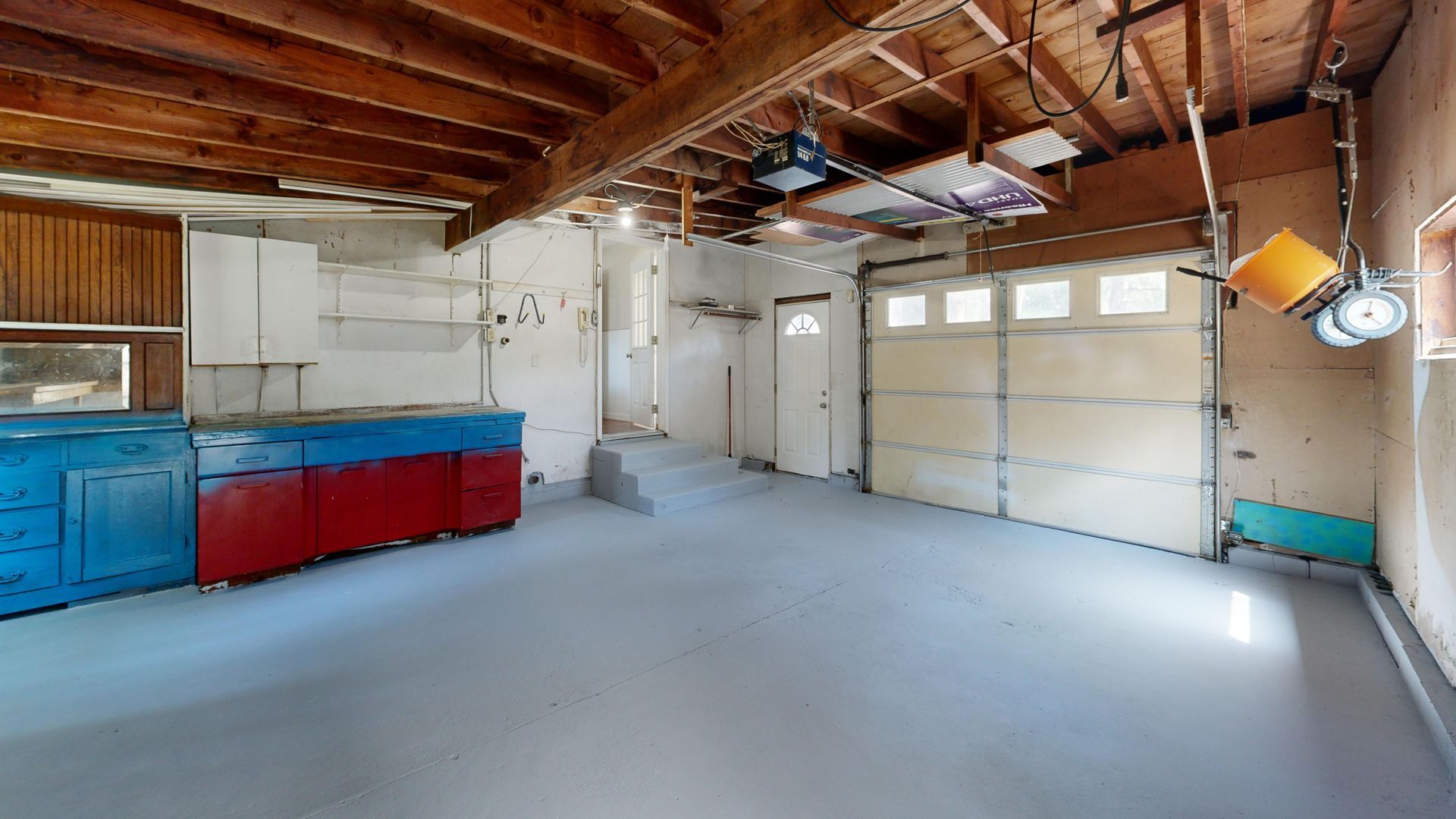
After installation, your garage floor looks clean and finished with a smooth, slightly glossy surface that reflects overhead light and makes the space feel brighter. You notice that oil drips from parking or maintenance work wipe away without leaving dark stains, and the floor no longer generates concrete dust that tracks into the house on shoes or gets stirred up when sweeping.
Coatings include the base coat and topcoat application with optional decorative flakes, but do not include crack repair beyond minor filling or concrete leveling to correct drainage issues. If your garage floor has significant cracks, active moisture problems, or structural settling, those must be addressed before coating to prevent the finish from failing as the underlying concrete moves.
Questions Before Scheduling Coating Work
Homeowners planning garage floor coatings in Tullahoma and neighboring communities often need clarity on preparation methods, product differences, and performance expectations before committing to the work.
Why is surface preparation critical for coating adhesion?
Coatings bond mechanically to the concrete surface by gripping into the open pores and profile created through grinding or blasting. If the surface is smooth, contaminated with oil, or sealed, the coating cannot grip properly and will delaminate under traffic or thermal cycling.
What is the difference between epoxy and polyurethane coatings?
Epoxy provides excellent adhesion and chemical resistance as the base coat, while polyurethane topcoats offer superior UV stability and abrasion resistance. Most residential systems use epoxy base coats with polyurethane or polyaspartic topcoats for balanced performance and durability.
How long before vehicles can park on the coated floor?
Light foot traffic is safe after 24 hours, but full vehicle traffic should wait 72 hours to allow the coating system to cure completely. Curing time varies with temperature and humidity—warmer conditions speed curing, while cold or damp weather extends it.
What color and finish options are available for garage floors?
Solid colors range from neutral grays and tans to bold blues and reds, with optional decorative color flakes broadcast into the base coat for a multi-tone speckled appearance. Topcoat sheens range from satin to high-gloss, affecting both appearance and slip resistance.
How does a coated floor perform in Tennessee's seasonal temperature swings?
Quality coatings remain flexible enough to expand and contract with the concrete through temperature changes without cracking or delaminating, provided the concrete itself is stable and properly prepared. The coating also protects against freeze-thaw damage by preventing moisture absorption into the concrete.
Local Concrete Services prepares and coats garage floors using mechanical surface prep and commercial-grade coating systems designed for residential vehicle traffic and chemical exposure. Contact us at (931) 581-2159 to schedule an estimate and discuss finish options for your garage.